Incentive structures guiding selection among card game types on handheld platforms
Lars Schwarz · Jun 15, 2026

Incentive structures guiding selection among card game types on handheld platforms
Handheld platforms host a range of card game formats that include competitive multiplayer titles and solitary puzzle variants, and incentive structures within these applications shape how users allocate their time across options, according to industry data from the Entertainment Software Association. Reward systems such as experience points, virtual currency, and tiered achievements operate differently depending on whether a game emphasizes head-to-head competition or individual progression, and developers adjust these mechanics to match platform constraints like screen size and session length.
Progression and reward layering across formats
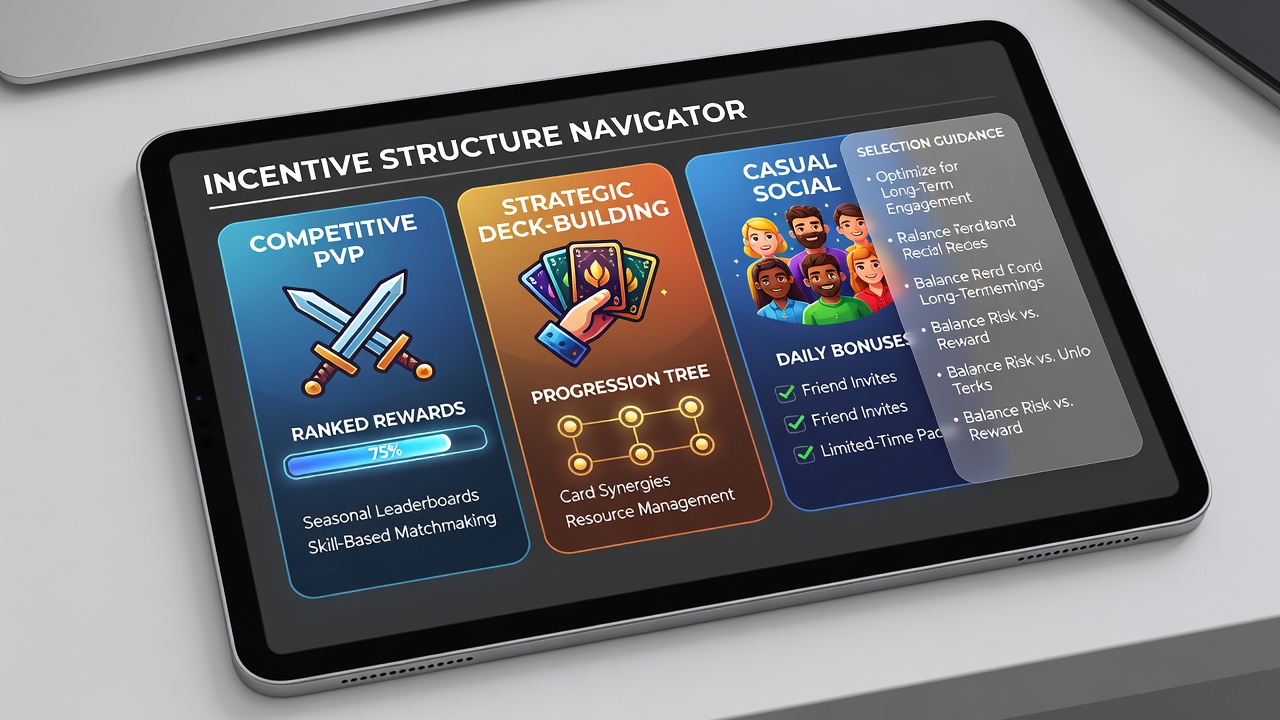
Daily login bonuses and streak multipliers appear consistently in both social card games and strategy-focused variants, yet their impact varies because multiplayer environments tie rewards to match outcomes while solo titles link them to completion speed or puzzle difficulty. Research from the Interactive Games and Mobile Association in Australia shows that players on tablets often migrate toward games offering cumulative season passes when those passes unlock cosmetic items usable across multiple card types, whereas smartphone sessions favor shorter reward cycles that reset every few hours. These patterns emerge because handheld hardware supports frequent micro-sessions, and incentive designs adapt by front-loading small gratifications that compound over repeated logins.
Social and competitive incentives
Leaderboards and clan-based challenges steer selection toward games that feature direct player interaction, and data collected through app analytics platforms indicate higher retention when rankings refresh weekly rather than monthly. Developers incorporate tournament brackets with escalating prize pools that scale according to entry thresholds, and these structures encourage users to sample different card game variants when cross-game leaderboards aggregate performance metrics. Observers note that such aggregation reduces the perceived risk of switching formats because accumulated points carry partial value across titles.
Monetization alignment and platform economics
In-app purchase models frequently bundle card packs or booster items with subscription tiers, and June 2026 figures released by the Canadian Interactive Digital Entertainment Association reveal that subscription uptake rises when bundles include exclusive access to limited-time events across multiple game modes. Payment flexibility further influences choices because platforms that support one-tap microtransactions see faster adoption of competitive formats where real-time purchases affect match outcomes. Those studying user pathways find that transparent conversion rates between virtual currencies and paid options correlate with sustained engagement across both free-to-play and premium card collections.
Cross-game portability and retention mechanics
Account linking and shared inventory systems allow progress made in one card game to influence starting conditions in another, and this portability reduces friction when users explore new formats. Studies conducted by European digital media research groups demonstrate that shared progression layers increase the likelihood of sampling lesser-played variants because initial barriers such as tutorial length or basic resource gathering become partially offset. Handheld platforms facilitate these connections through cloud saves that synchronize across devices, and incentive structures exploit this capability by awarding transferable tokens upon achievement milestones.
Regional regulatory influences on design
Regulatory frameworks in different jurisdictions shape how rewards are presented, particularly when loot-box style mechanics intersect with card game randomization. Government reports from Singapore's Infocomm Media Development Authority document that disclosure requirements around probability tables have prompted developers to replace opaque random rewards with deterministic progression tracks in certain markets. These adjustments alter selection patterns because players gravitate toward formats where reward outcomes feel more predictable within the constraints of local rules.
Conclusion
Incentive structures on handheld platforms continue to evolve through iterative adjustments based on session data and retention metrics, and the interplay between progression speed, social features, and monetization layers determines how users distribute attention among card game types. Developers monitor these dynamics closely because platform updates and hardware changes require corresponding refinements to reward timing and portability features, ensuring sustained participation across competitive and solitary formats alike.